

There’s an old saying that we’re children twice. I don’t know where it came from, but here’s the idea: The first time, we enter into the world helpless. Someone feeds, bathes, holds, and teaches us without asking for anything in return. The second time, hopefully after a long life, we find ourselves needing some of that same assistance. Getting up the stairs, driving to the doctor, cutting up our food, or helping us to remember daily routines.
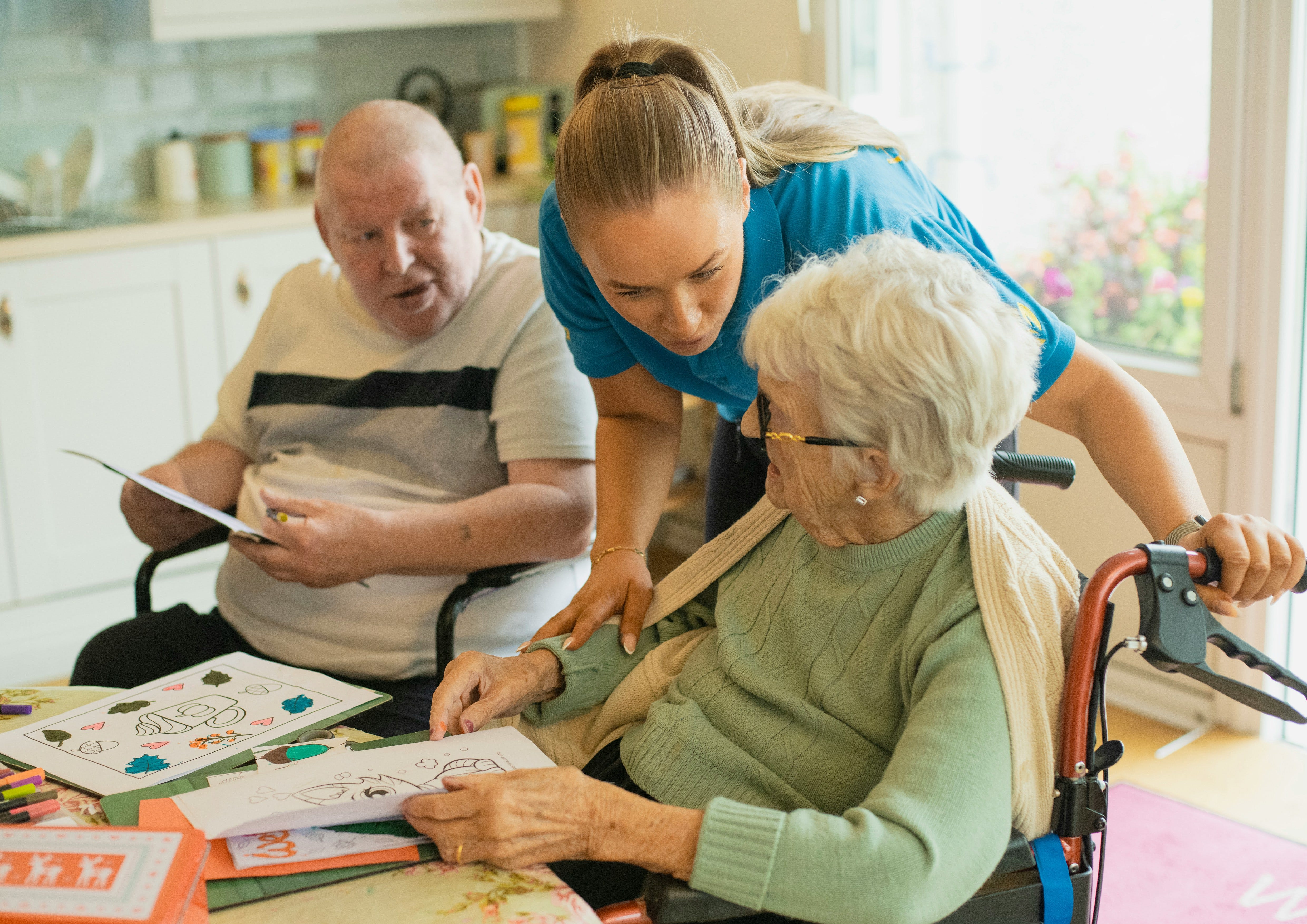
Many of us hate this idea.
We’ll happily acknowledge that babies need care. Facing the inevitability that we might need it again, that our own bodies and minds could circle back toward reliance, is a bitter pill to swallow. I’ve heard people call it a “demotion.” Like we’re losing the very thing that makes us adults.
“I once ran a company employing thousands of people and now my daughter wants the car keys.”
“I raised four children, teaching them everything they know about the world. Now they’re telling me I need to move in with them!”
It feels like surrender. I get it. What would happen, how would it feel, if we thought about it differently? How we frame dependence shapes how well we live through it.
Words Can Sting
I’ve written about the way our capitalist culture celebrates independence. Like it’s the finish line – the ultimate goal. We celebrate our first apartment and paycheck, that glorious day we stop asking our parents for anything. Self-reliance becomes so tangled up with dignity that needing help turns into a moral failing. Nonsense. Needing help is part of life.
The phrase “twice a child” makes it worse.
It stinks of condescension, as if an eighty-year-old with a lifetime of competence has been returned to preschool. Older adults aren’t toddlers. They’ve got lifetimes of histories, opinions, humor, and hard-earned wisdom. Helping them with a task doesn’t require them to be infantilized first.
So the comparison is useful only up to a point. What the two stages of our lives truly share is interdependence - and every other phase of life has this as well. We don’t talk about it that often. But as human beings, we are built to be held up by and supportive of each other. It’s just seen most clearly at the beginning and the end.
Dependence is Part of a Full Life
None of us is truly independent. The city planner needs the architect, who needs construction workers, who need the mechanics and supply chain managers. Everyone in a community needs the road builders and electricians and teachers and gas station attendants. The list goes on and on. When we’re forty-five, we simply hide our dependence better or forget about it entirely. It’s mediated by paychecks and systems rather than our daughter’s arm.
Late-life dependence isn’t as well-hidden.
When we see our existence this way, accepting help isn’t giving up. I tell careseekers all the time that acceptance is a skill, and like any skill, it needs to be practiced. If we’re doing it badly, that means we need more time to hone that skill.
Those of us who receive support gracefully are those who have learned to receive.
Coping Skills
When our idea of independence is changing, I’ve seen these habits make the transition a gentler one.
Trade “give up” for “choose.” Control is the real loss my careseekers grieve. So I encourage them to hold on to every decision that is still theirs. This includes what to wear or eat, what time the helper comes, or which tasks they’ll do themselves. Accepting a ride to the doctor while insisting on picking the restaurant afterward helps us continue writing the story of our own lives.
Say what you need, and also what you don’t. Helpers often over-compensate out of love or anxiety. A clear, kind sentence such as “I’d like help with the stairs, but I can button my own coat” saves both of you from resentment.
Talk about the grief. Mourning the things we can no longer do is natural. Talking with a friend, clergyperson or counselor, is a healthy way to process that grief. It keeps sadness from curdling into grumpiness.
Keep giving. Dependence in one area doesn’t erase the ability to contribute in others. I tell clients and their families that an older person can still listen, advise, tell family stories, pray for people, or use laughter to break the tension.
Call It By a Better Name
I believe that words matter. Calling this phase “twice a child” is only one option. Some alternatives include:
“A season of interdependence.” It frames the stage as a natural turn.
“The return trip.” The care that was given on the way up is now offered on the way back.
“Mutual care.” This is my favorite. It highlights that the relationship still runs in both directions.
We don’t have to pick one. I just think it’s important to choose words that preserve everyone’s dignity, and to let the older person decide what to call this phase of their life.
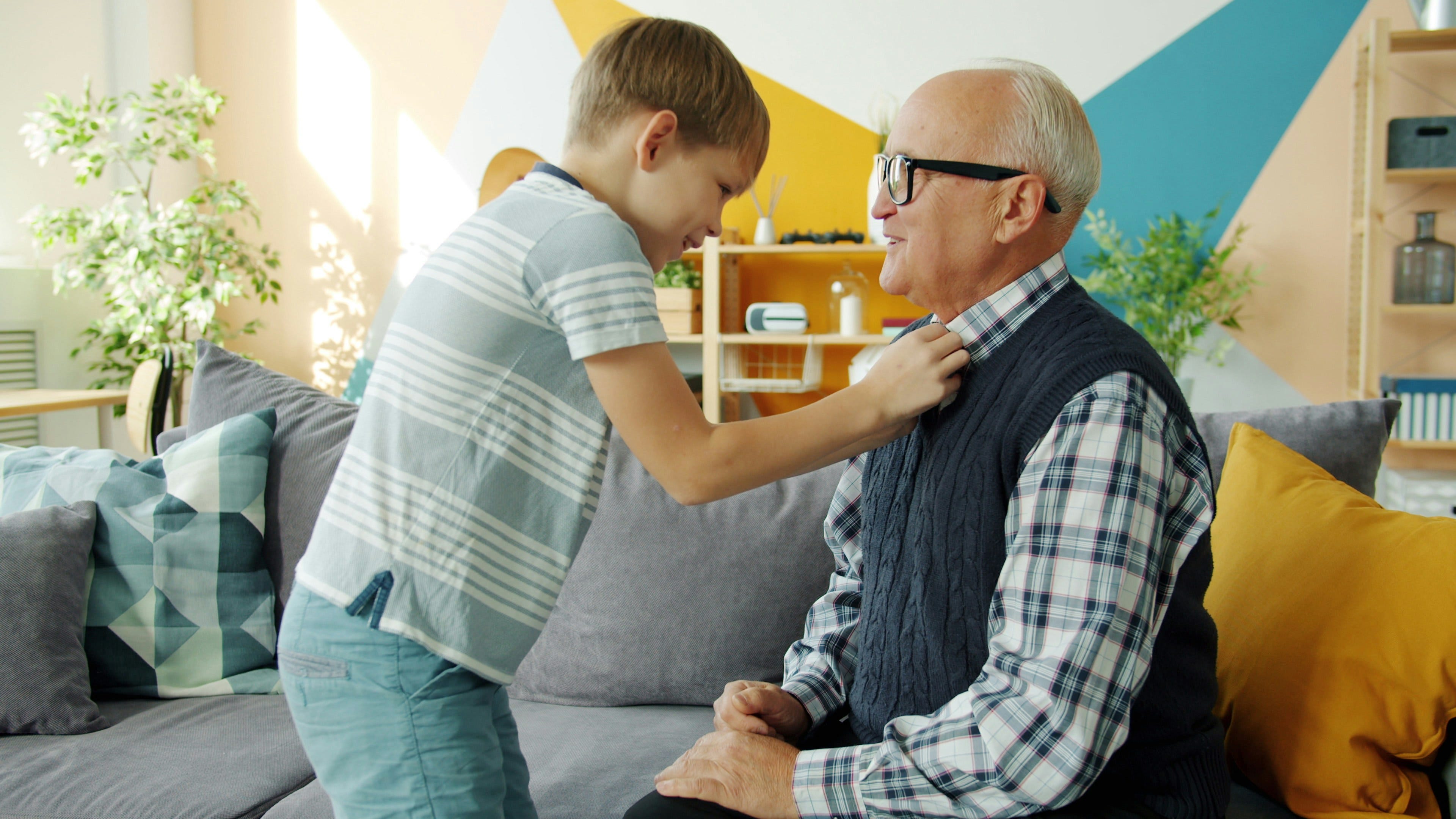
We talk so much about the burden of caregiving that we forget its other side. Caring for someone who cared for us is one of the few chances we get to repay a debt of sorts. Children and grandchildren who help an aging relative often describe a surprising tenderness. They learn patience. When my Nana slowed down in her later years, I heard stories I would never have heard otherwise. We see, up close, what a long life looks like, which quietly prepares us for our own.
Teenagers who help a grandparent with their phone learn that being needed feels good, and that the people who raised their parents are still full of surprises.
An older person who refuses all help is, without meaning to, denying the people they love this experience. Letting them care for you is one more way of loving them. It tells a daughter or grandson: you’re strong enough and I trust you to do this.
The Long View
Perhaps the best thing about “twice a child” is that it reminds us the story is circular. Someone once cared for us out of love. At some point we will return the favor, and those younger loved ones we once cared for will do the same for us.
We’re not going to like every part of that. But let’s stop treating it as embarrassing, and instead see it in a new light. It’s the oldest bargain in human life, kept faithfully, generation to generation.
Well said {written)